
BETTER People
DIVERSITY, EQUITY AND INCLUSION
AWC fosters a diverse, equitable, and inclusive workplace where employees are respected, valued, and empowered to contribute their full potential. Through inclusive people practices and equal opportunity, the Company seeks to strengthen innovation, employee engagement, leadership readiness, and long-term organizational resilience across its hospitality and real estate portfolio.
STRATEGIC CONTEXT
Diversity, equity, and inclusion are fundamental to AWC’s ability to attract talent, foster innovation, and create long-term value. A diverse workforce and inclusive culture enable employees to contribute their unique perspectives and capabilities, strengthening decision-making, collaboration, and business performance.
As AWC continues to expand across multiple business segments and destinations, the Company is committed to providing equal opportunities and fostering a workplace where individuals are respected, valued, and empowered to succeed, regardless of gender, age, nationality, religion, disability, or other personal characteristics.
By embedding diversity, equity, and inclusion throughout the employee lifecycle, including recruitment, development, career advancement, and leadership opportunities, AWC aims to enhance employee engagement, strengthen leadership capability, and build a resilient organization that reflects the diversity of the communities it serves.
COMMITMENTS & TARGET
Diverse Workforce
Foster workforce diversity across all levels of the organization and strengthen representation throughout the talent pipeline.
Equal Opportunity
Promote fair and equitable access to recruitment, development, career progression, and leadership opportunities.
Inclusive Workplace Culture
Create a workplace where all employees feel respected, valued, and empowered to contribute and succeed.
STRATEGY
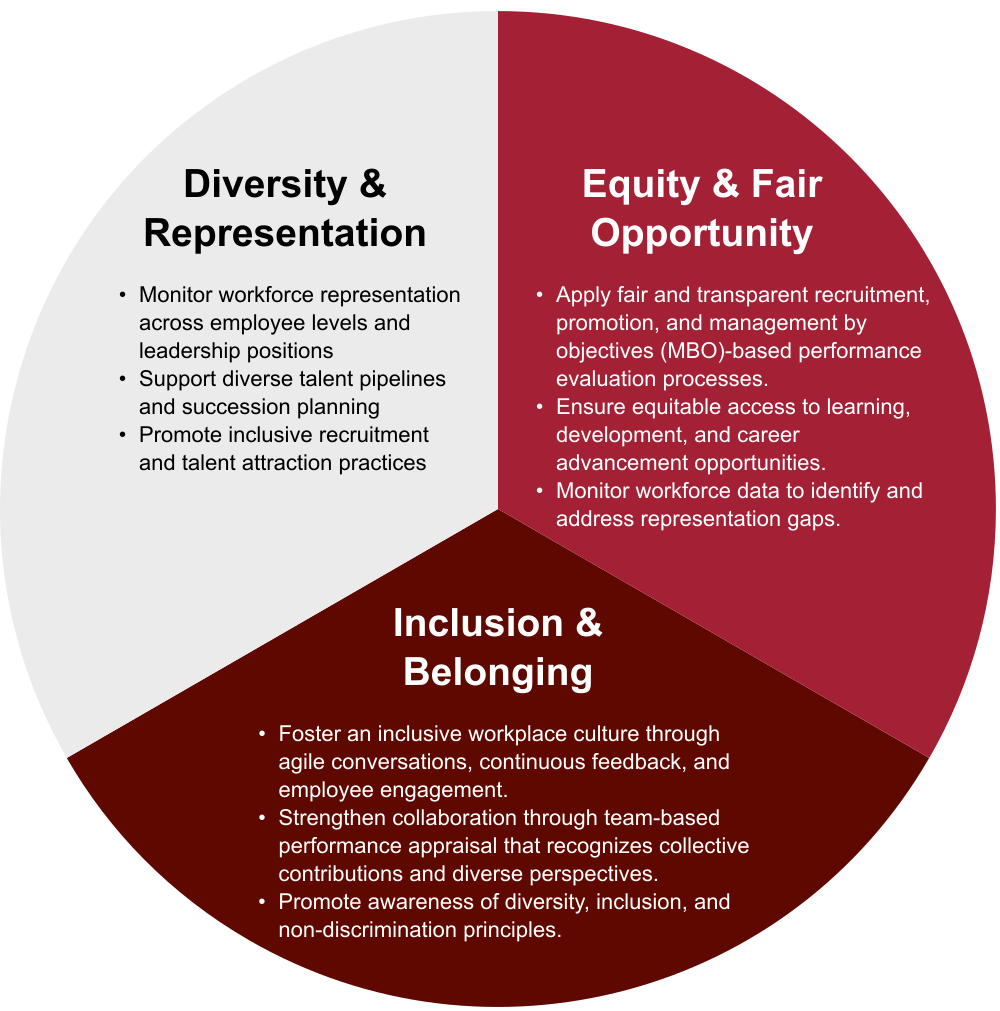
Diversity & Representation
Strengthening workforce diversity and representation across employee groups and leadership levels to support a balanced and future-ready organization.
Equity & Fair Opportunity
Promote equitable employment practices and equal access to development, advancement, and career opportunities through fair and transparent people processes.
Inclusion & Belonging
Foster an inclusive workplace culture that values different perspectives, encourages participation, and enables employees to feel a sense of belonging.
STRATEGIC PRIORITIES
EMPLOYEE WELL-BEING AND SUPPORT
AWC is committed to fostering an inclusive and supportive working environment that promotes employee well-being and work-life balance. Recognizing the diverse needs and circumstances of employees, the Company supports flexible working arrangements, parental and family responsibilities, and initiatives that promote physical, mental, social, and financial well-being.
Flexible Work Arrangements
Flexible working arrangements are supported with consideration of employees’ needs, job responsibilities, and operational requirements. Where appropriate, employees have flexibility in their starting and finishing times to support work-life balance.
Working-from-home arrangements are also available where appropriate, taking into account the nature of the role and operational requirements.
Maternity and Paternity Leave
Parental leave forms part of AWC’s support for employees in balancing professional and family responsibilities. Female employees are entitled to up to 98 days of maternity leave per pregnancy, of which 45 days are paid. Male employees are entitled to up to one working day of paternity leave when their spouse gives birth, in accordance with the Company’s employment regulations.
Part-Time Employment
Part-time employment arrangements are available for relevant roles across AWC’s operations, providing opportunities to work fewer hours than full-time employment.
Employee Health and Well-being
AWC promotes a holistic approach to employee well-being, encompassing physical, mental, social, and financial well-being through programs, benefits, and workplace facilities that support employees’ diverse needs.
- Physical Well-being: Initiatives include annual health check-ups, health and life insurance, health education and disease-prevention activities, as well as access to a Medical Room, Fitness Room, and facilities that encourage physical activity and an active lifestyle. A dedicated Lactation Room with refrigerator facilities is also available to support breastfeeding and breast-pumping needs.
- Mental Well-being: Workplace stress management activities and workshops support employees’ mental well-being, complemented by access to dedicated spaces for rest and relaxation, including a Nap Room.
- Social Well-being: Activities that encourage employee interaction and positive workplace relationships contribute to social well-being. An inclusive workplace environment is further supported through facilities including a Recreation Space, Prayer Room, Kid Zone with an indoor play area, and Pet Zone, addressing employees’ diverse personal and family needs.
- Financial Well-being: Financial planning education and access to the Company’s provident fund support employees in strengthening their long-term financial well-being.
PERFOMANCE
AWC monitors diversity, equity, and inclusion indicators to understand workforce representation, support equitable talent development, and foster an inclusive workplace culture. Insights from workforce data, employee engagement, and talent management processes are used to strengthen leadership readiness, promote equal opportunities, and support long-term organizational resilience.
OCCUPATIONAL HEALTH, SAFETY AND WELL-BEING
AWC is committed to creating safe, healthy, and supportive environments for employees, contractors, tenants, customers, visitors, surrounding communities, and other stakeholders across its hospitality, retail, office, and mixed-use portfolio. We embed occupational health, safety, and well-being throughout the asset lifecycle to protect people, promote physical and mental well-being, and foster a proactive safety culture. By creating trusted environments where people can work, stay, shop, and connect with confidence, we strengthen operational resilience and create long-term sustainable value.
STRATEGIC CONTEXT
Every AWC destination is designed to be a place where people can work, stay, shop, and connect with confidence. As a leading integrated lifestyle real estate group, AWC recognizes that creating safe, healthy, and supportive environments is fundamental to protecting people, enhancing everyday experiences, and earning the trust of employees, contractors, tenants, customers, visitors, and surrounding communities.
Occupational Health, Safety and Well-being is therefore embedded throughout the asset lifecycle to foster a culture of prevention, promote physical and mental well-being, strengthen organizational resilience, and support the sustainable growth of our business.
COMMITMENTS & TARGET
AWC is committed to creating safe, healthy, and resilient workplaces through long-term Occupational Health, Safety and Well-being commitments that drive continual improvement across all business operations while protecting people and promoting workforce well-being.
Zero Fatalities and Serious Injuries
Prevent work-related fatalities and serious injuries through effective risk management, incident prevention, and a strong safety culture across AWC-managed operations.
Reduction of Occupational Injuries
Reduce occupational injuries among employees and contractors through preventive risk management, hazard control, safety performance monitoring, and continual improvement.
Emergency Preparedness & Resilience
Strengthen emergency preparedness and crisis response capabilities through regular planning, training, drills, and continual enhancement of organizational readiness and resilience.
Workforce Health & Well-being
Promote physical, mental, and psychosocial well-being by integrating health and well-being into workplace practices, enabling a resilient, engaged, and high-performing workforce.
STRATEGY
AWC delivers its Occupational Health, Safety and Well-being commitments through four strategic pillars that strengthen prevention, resilience, and workforce well-being across the asset lifecycle. Together, these pillars foster a proactive safety culture while supporting trusted destinations where people can work, stay, shop, and connect with confidence.
Risk-Based Prevention
Proactively identify, assess, and manage occupational health and safety risks through hazard identification, risk assessment, preventive controls, and integration with Enterprise Risk Management (ERM) to prevent incidents before they occur.
Safety Across the Asset Lifecycle
Embed health and safety considerations throughout planning, development, construction, operations, and asset enhancement to ensure consistent safety standards while protecting employees, contractors, tenants, customers, visitors, and surrounding communities.
Emergency Preparedness & Crisis Response
Strengthen organizational resilience through emergency preparedness, crisis management, business continuity planning, and coordinated response mechanisms that protect people, safeguard assets, and minimize operational disruption.
Health, Well-being & Safety Culture
Foster a proactive culture where leadership commitment, employee participation, continuous learning, and well-being initiatives empower people to work safely, stay healthy, and perform at their best.
STRATEGIC PRIORITIES
Advance Workplace Health & Safety
Strengthen preventive risk management, hazard identification, contractor safety, and workplace health practices to create safer and healthier working environments across all business operations. Conduct regular internal safety inspections by qualified ISO 45001 internal auditors.
Strengthen Emergency Preparedness & Organizational
Resilience Enhance emergency preparedness, crisis response, business continuity, and safety governance to strengthen organizational resilience while minimizing operational disruption across AWC's portfolio.
Foster Workforce Health & Well-being
Promote physical, mental, and psychosocial well-being through employee engagement, health initiatives, and supportive workplace practices that enable people to thrive
Build a Strong Safety Culture
Embed a proactive safety culture through leadership commitment, employee participation, continuous learning, and shared accountability to strengthen safe behaviors across the organization and its value chain.
PERFOMANCE
AWC measures the effectiveness of its Occupational Health, Safety and Well-being Strategy through key performance indicators covering workplace health and safety, occupational injuries, emergency preparedness, and workforce well-being. These indicators enable transparent performance monitoring, support continual improvement, and reinforce our commitment to creating safe, healthy, and resilient environments across our portfolio.
HUMAN RIGHTS
AWC respects internationally recognized human rights and is committed to conducting business responsibly across its operations and value chain. Through a risk-based Human Rights Due Diligence (HRDD) approach, the Company seeks to identify, prevent, mitigate, and address actual and potential human rights impacts while strengthening responsible business practices and long-term stakeholder trust.
STRATEGIC CONTEXT
Respect for human rights is fundamental to sustainable business and long-term value creation. As AWC operates across hospitality, real estate, construction, and complex value chains, the Company recognizes that its activities may affect employees, business partners, customers, and surrounding communities.
Effective human rights management helps reduce operational, legal, and reputational risks, while strengthening stakeholder trust, promoting responsible business conduct, and supporting sustainable growth throughout the value chain.
AWC integrates human rights considerations into business decision-making, operational practices, and stakeholder engagement processes. Through its Human Rights Due Diligence approach, the Company seeks to identify and manage potential risks, promote fair and respectful treatment, and foster a culture that upholds human dignity, equality, and inclusion across its portfolio.
COMMITMENTS & TARGET
Respect Human Rights Across the Value Chain
Embed respect for human rights throughout operations, business relationships, and relevant value-chain activities.
Strengthen Human Rights Risk Management
Identify, assess, and manage salient human rights risks through ongoing due diligence and stakeholder engagement.
Foster Responsible Business Conduct
Promote ethical business practices, effective grievance mechanisms, and access to remedy for affected stakeholders.
STRATEGY
Human Rights Governance & Accountability
Strengthen governance structures, policies, and oversight mechanisms to ensure effective management of human rights risks and impacts.
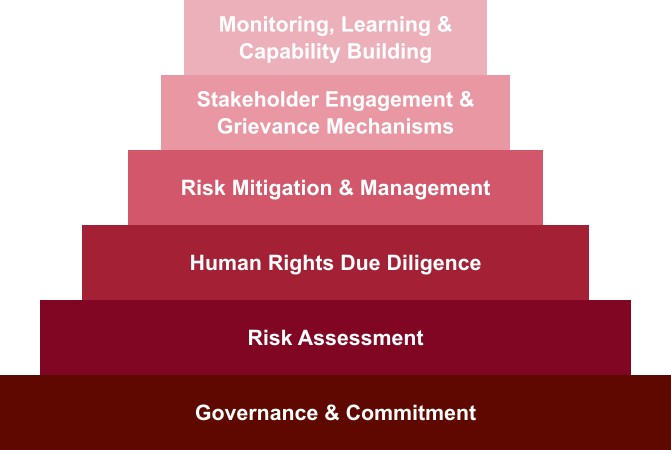
Human Rights Due Diligence & Risk Management
Identify, assess, prioritize, and address actual and potential human rights impacts across operations and relevant value-chain activities.
Stakeholder Protection & Access to Remedy
Promote fair treatment, effective grievance mechanisms, stakeholder engagement, and appropriate remediation where impacts occur.
HUMAN RIGHTS MANAGEMENT HIERARCHY
PERFOMANCE
AWC continuously strengthens its human rights management practices through human rights risk assessments, due diligence processes, stakeholder engagement, and responsible business conduct initiatives. Insights gained from these activities support ongoing risk mitigation, governance enhancement, and the integration of human rights considerations across operations and relevant value-chain activities.